 Daylta
Why your to-do list needs a clock ⏰
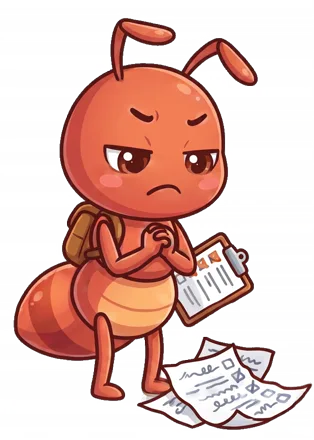
You have a list. You have probably had many. The trouble is that a list answers only one question, what, and quietly skips the other two: when, and how long.
A task with no time attached is a wish. It can be done at any time, so it gets done at no time. That is also why lists grow: adding to them is free, and nothing on them ever comes due. The list isn't failing you. It was never designed to make anything happen.
How we spend our days is, of course, how we spend our lives.
Give every task a time
Take one item and decide when you will do it. "Call the plumber" becomes "Call the plumber, 10:30, ten minutes." Psychologists call this an implementation intention, and it has been studied for decades: people who decide in advance when and where they will act are far more likely to actually do it than people who merely intend to.
Three things change the moment a task has a time.
- It stops being a decision. At 10:30 there is no "should I do this now?" The decision was made in the morning, when you were calm. All that is left is to start.
- It becomes a promise to yourself. At 10:40, with the call still not made, you feel it. That small discomfort is the point. It is accountability without a boss, and it is what a list can never give you, because a list has no 10:40.
- The duration forces honesty. Six "quick" tasks with real durations next to them turn out to be a whole afternoon. Better to find that out at 8 am than at 6 pm.
You may delay, but time will not.
Keep the plan small enough to finish
A long plan with times on it is still a long plan. We are reliably bad at guessing how long things take; researchers named this the planning fallacy back in 1979, and it has not improved since. The fix is not better guessing. It is planning less.
Pick the three things that would make today a win, and give those a time first. Put anything else on the day only if there is real room left, not hoped-for room. Finishing the plan matters more than the size of the plan: a short plan you complete makes tomorrow's plan believable, and a long plan you abandon teaches you to ignore your own plans.
It is not that we have a short time to live, but that we waste a lot of it.
Review at the end of the day

Two minutes at night: what got done, what slipped, and why. This is not for guilt. It is for information.
A task slips for one of three reasons, and each has its own fix. There wasn't enough time: plan less tomorrow. It was the wrong time: move it to where it fits. You didn't want to do it: make it smaller, or admit it doesn't matter and drop it.
The review is also what makes the pressure of a missed time useful. A miss you look at becomes a better plan. A miss you never look at becomes a longer list.
Plans are nothing; planning is everything.
This is exactly what Daylta is built to do
Daylta is a day planner for Android built around this loop and nothing else.
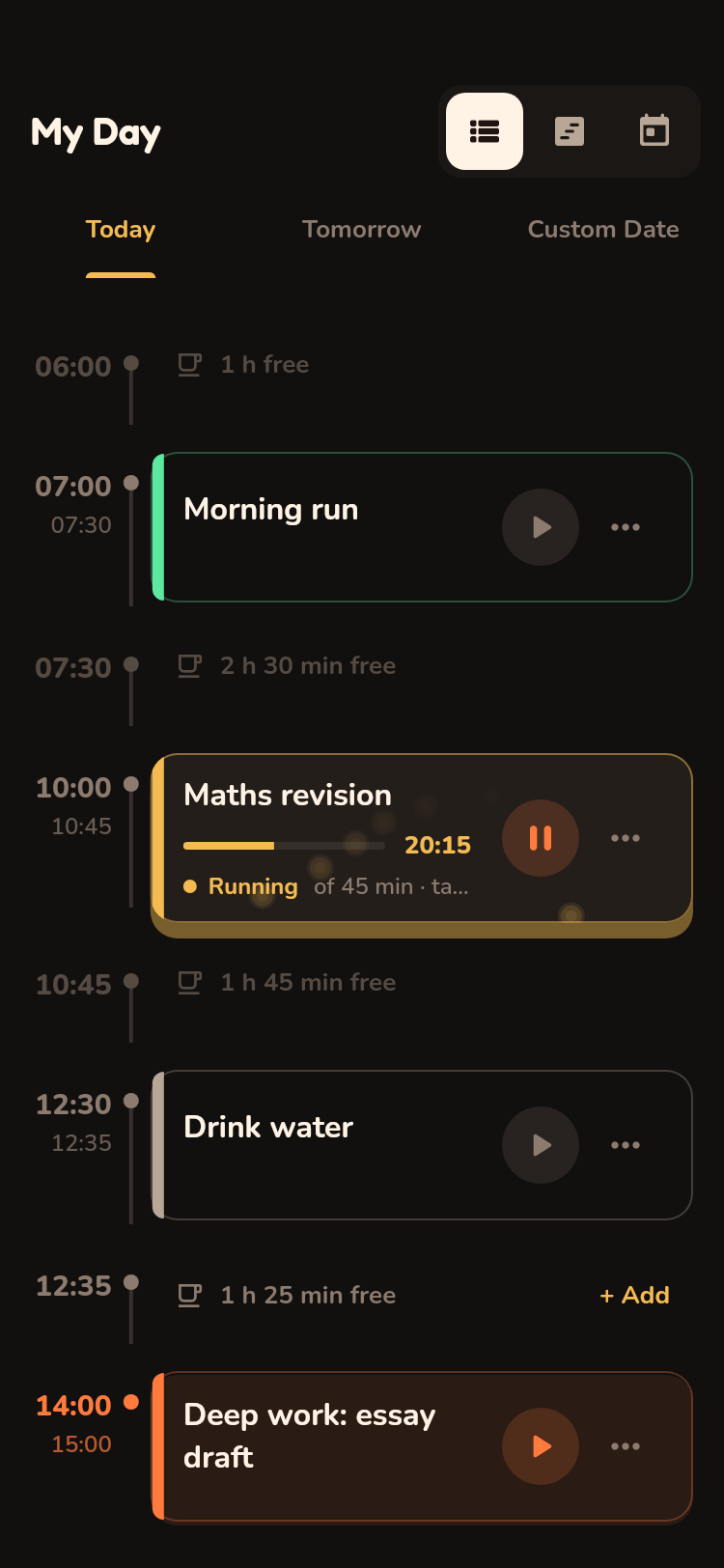
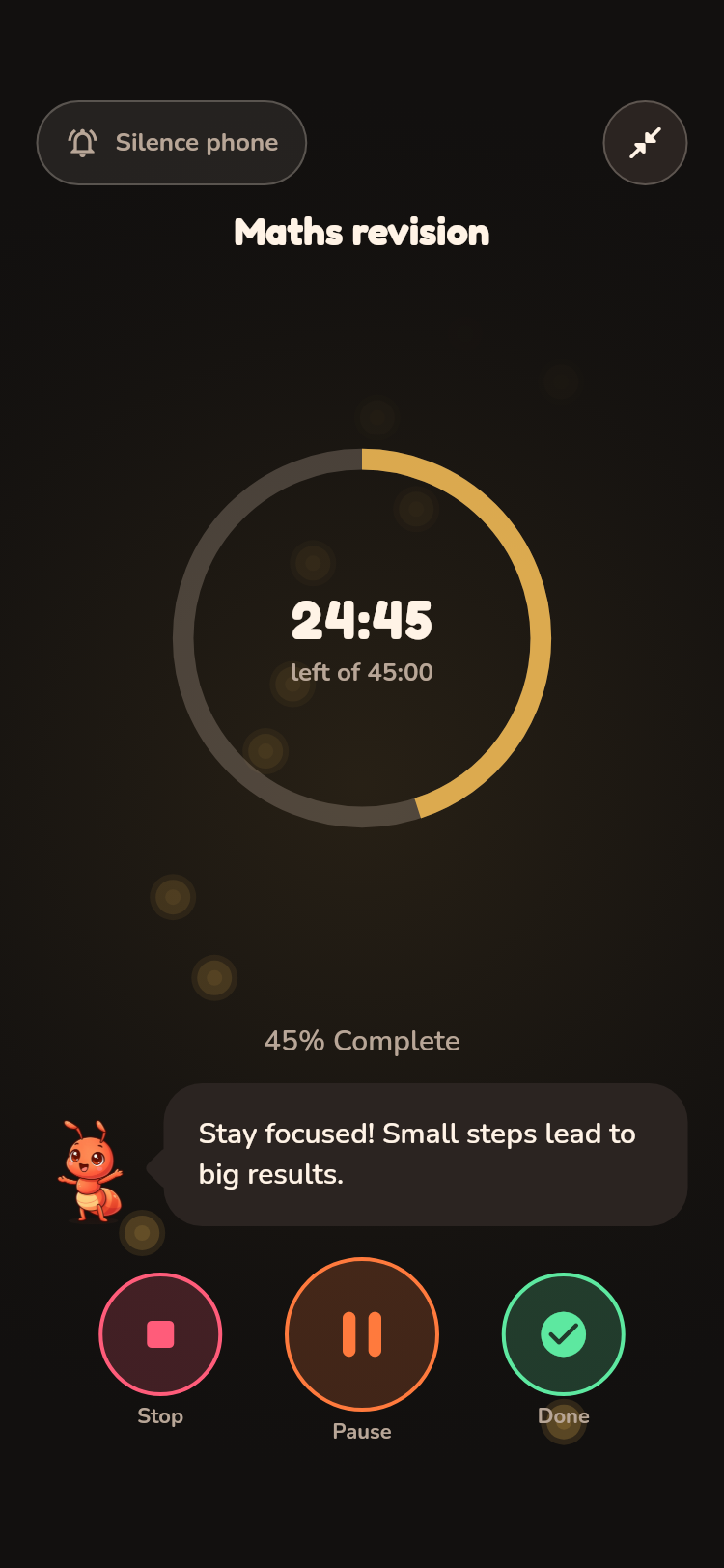
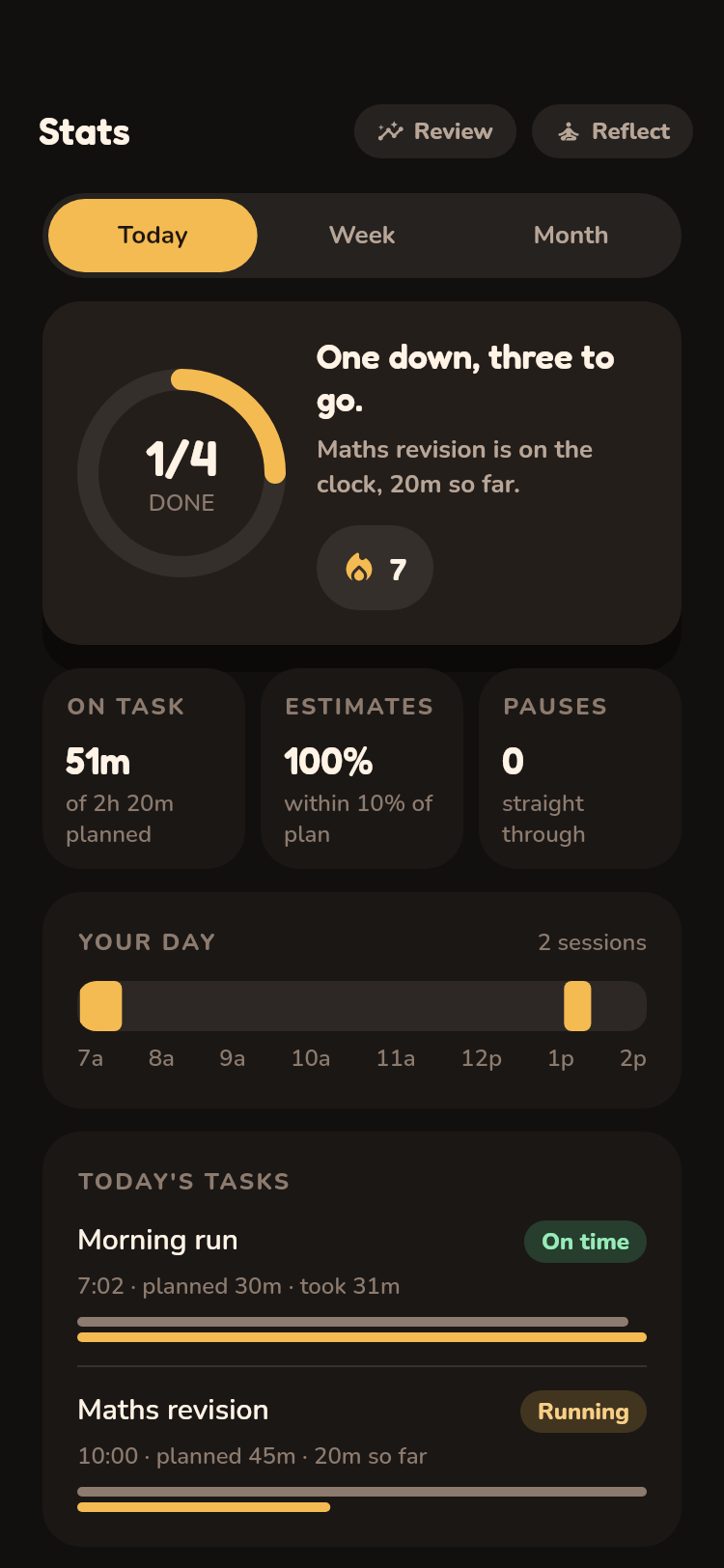

The unflattering numbers stay on screen, because that contrast is the coaching. And Bitsy, the ant who lives in the app, cheers when you finish and never scolds when you don't. A missed day is a restart, not a red mark.
Everything stays on your phone. No account, no ads, nothing sent anywhere.
Haven't done the 2-minute quiz yet? Find out your To-Do type.